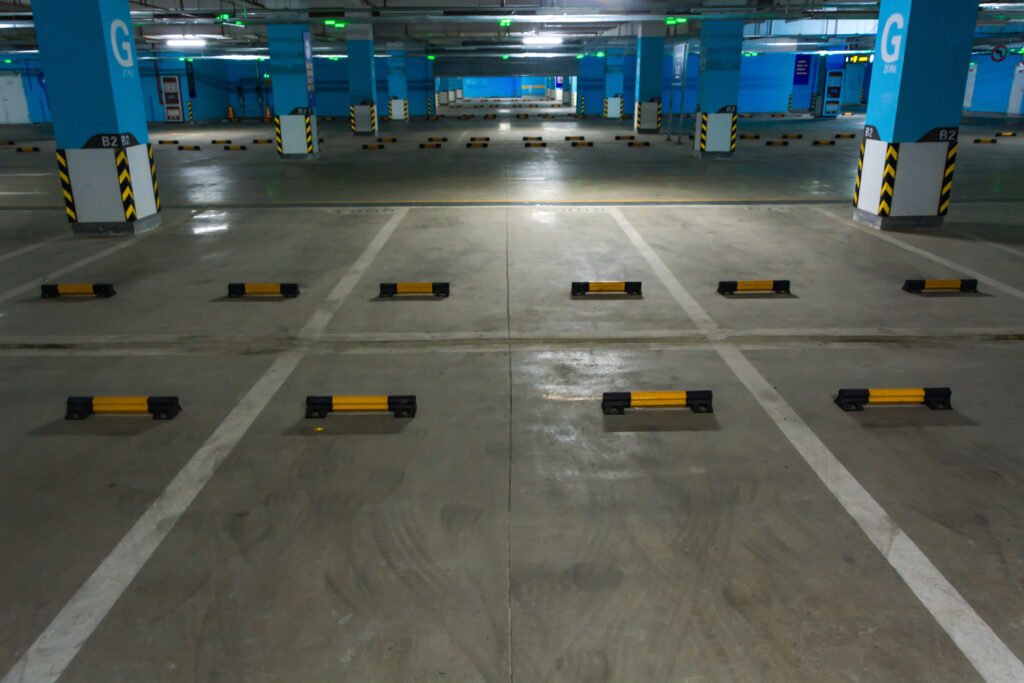
Santa Fe Street. 135th Street. Black Bob Road. Strang Line Road.
The commercial corridors, apartment communities, and retail centers that make Olathe the heart of Johnson County.
If you own or manage a property here, your parking lot is telling a story. Is it saying “we take pride in this place” or “we’ve let things slide”?
When a tenant pulls into an apartment complex near Olathe Northwest with crisp, bright stalls, they feel respected. When a customer walks across a freshly striped lot at a strip center off 119th Street, they notice before they even step inside. When an appraiser or fire marshal pulls up to a property with clearly marked fire lanes and visible handicap stalls, they see proactive maintenance—not deferred liability.
A well-marked parking lot isn’t just about appearance — it’s about safety, liability reduction, and property value.
Many property owners assume their lot is fine because “it’s always been that way.” But ADA requirements have changed. And Johnson County code enforcement pays attention.
Here’s what inspectors look for at Olathe properties near K-7, I-35, or downtown:
Stall width.
Standard accessible stalls must be at least 96 inches wide (8 feet). Van-accessible stalls need 132 inches (11 feet). If your lot was striped 10+ years ago, your van stalls are almost certainly too narrow.
Access aisles.
Every handicap stall needs an adjacent access aisle at least 60 inches wide (5 feet). No parking allowed there. The aisle must connect directly to a sidewalk or accessible route.
Signage.
Every accessible stall needs a sign with the International Symbol of Access mounted 60 inches to the center. Van stalls need additional “Van Accessible” signage.
We measure all of this before we paint.
If something isn’t right, we flag it. You don’t get surprised by an inspection later.
Commercial lot in Olathe – Handicap sign inspection ready – Borderline Striping